
A crypto domain can cost far more than another with a similar extension, but the reason isn’t always obvious. Some names receive a premium designation based on how a naming system or provider evaluates them, while others command high prices because buyers see greater commercial or branding potential. The problem is that “premium” does not have one universal meaning across Web3. Understanding what drives the classification, who assigns it, and how it differs from actual market value can help buyers judge a name based on more than the label alone.
What Makes a Crypto Domain Premium?
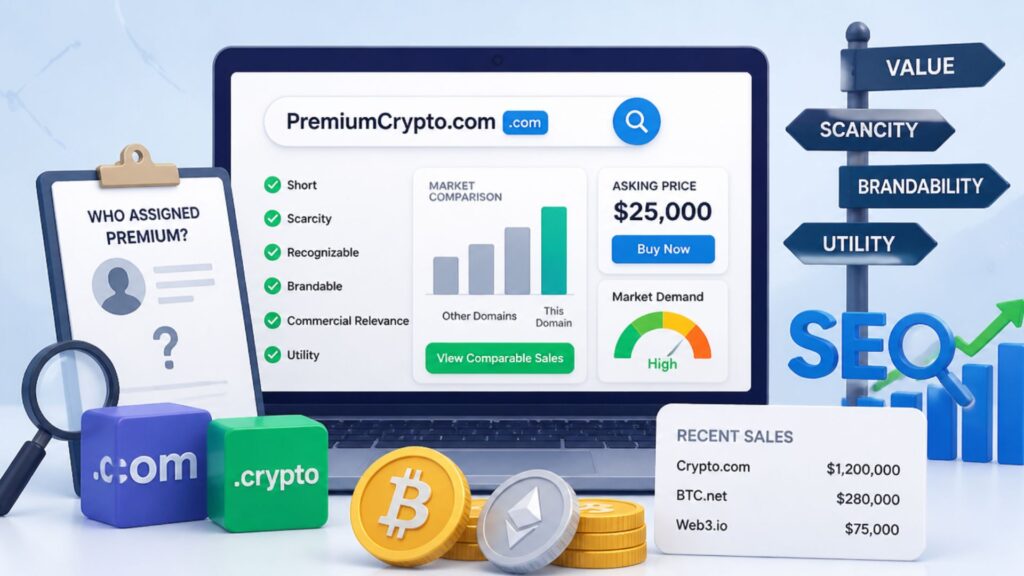
No universal formula exists for deciding whether a crypto domain is premium. Different naming systems and providers can use their own criteria, but the same factors often influence how a name is priced or perceived: scarcity, meaning, brandability, and practical utility.
Shortness and Scarcity
Short names are naturally scarce because there are fewer combinations available. That limited supply can make them more desirable, particularly when the name is also easy to remember or has a clear meaning. ENS demonstrates this through its registration pricing for .eth names. Shorter names have higher base registration prices because they are less common.
Still, length alone does not establish value. A short sequence with no clear meaning may attract less demand than a longer name that represents a strong brand or commercial concept.
Recognizable Words and Commercial Relevance
A recognizable word can have value because several potential buyers may be able to use it. Terms related to finance, payments, technology, gaming, identity, or other established markets can have broader commercial applications than arbitrary strings.
The key is not simply whether a keyword is popular. Its value depends on how clearly it communicates a concept and whether businesses or users have a reason to associate themselves with it. A relevant word can therefore support premium pricing, but market demand still determines whether buyers consider that price justified.
Brandability and Memorability
A strong name should be easy to read, pronounce, spell, and recall. This matters because a Web3 name can be more than an address. It can become part of a project’s identity, a user’s online handle, or a recognizable name across supported applications.
Simple, distinctive names generally have an advantage over strings that require explanation or are easy to mistype. That does not guarantee a premium classification, but it can increase the pool of potential buyers.
Utility and Ecosystem Demand
Utility can strengthen a name when the underlying naming system is supported across wallets, applications, marketplaces, and other Web3 services. A name that works as a recognizable identity or payment identifier has more practical use than one with little ecosystem support. Ecosystem demand also matters. A useful name in a widely supported naming system may attract more interest than an equally attractive name in a system with limited adoption.
That is why you shouldn’t judge premium status by name alone. Scarcity can explain why a name is limited, but utility and demand help explain why someone may actually want it.
Who Controls the Premium Label?
The answer depends on where the name is being registered or sold. No single authority assigns a universal “premium” status to every crypto domain. The naming protocol, domain provider, marketplace, or current owner may have control over different parts of the pricing process.
Naming Registries and Protocols
The underlying naming system can establish its own registration rules and pricing structure. ENS, for example, uses different pricing rules for .eth names based partly on character length. It also uses the term Temporary Premium for certain recently expired names. That premium is a short-term mechanism designed to discourage automated attempts to immediately register an expired name, rather than a statement that the name is inherently more valuable.
This distinction matters because a protocol-defined premium can describe how a name is priced or made available, not necessarily how much it is worth on the open market.
Domain Providers and Marketplaces
A provider can also create its own premium category. Unstoppable Domains, for example, describes premium names as short, common, or popular names and states that it determines their classification and pricing. Its premium designation therefore reflects the provider’s own criteria rather than a universal Web3 standard.
Marketplaces can further influence how names are presented and priced by highlighting certain listings or applying their own categories. That makes it important to check who is using the word “premium” and what their criteria are before treating the label as a measure of value.
Owners and the Aftermarket
Once a name is owned, the seller can set an aftermarket asking price independently of the original registration price or premium classification. Unstoppable Domains, for instance, distinguishes owner-listed names from its own premium pricing, with the owner determining the asking price for a “For Sale by Owner” listing.
That creates an important separation between premium status and resale price. A high asking price shows what the owner wants to receive, not necessarily what the market considers the name worth.
Ultimately, no registry or marketplace can guarantee that buyers will accept a particular price. The premium label can explain how a name was classified or initially priced, but actual market demand determines whether that valuation holds up in the aftermarket.
Premium Price vs. Actual Market Value
A premium price tells you what a naming system, provider, or seller is charging. It does not necessarily tell you what the name is worth to buyers. Those are separate measures, and confusing them can lead to poor purchasing decisions.
| Term | What it tells you |
| Premium classification | How a naming system or provider categorizes the name |
| Registration price | What the provider charges to register it |
| Owner’s asking price | What the current owner wants for a resale |
| Estimated value | A valuation based on available market or naming data |
| Completed sale | What a buyer actually paid |
The difference becomes important in the aftermarket. A seller can set a high asking price because a name is short, commercially relevant, or potentially useful. That price remains an expectation until a buyer accepts it.
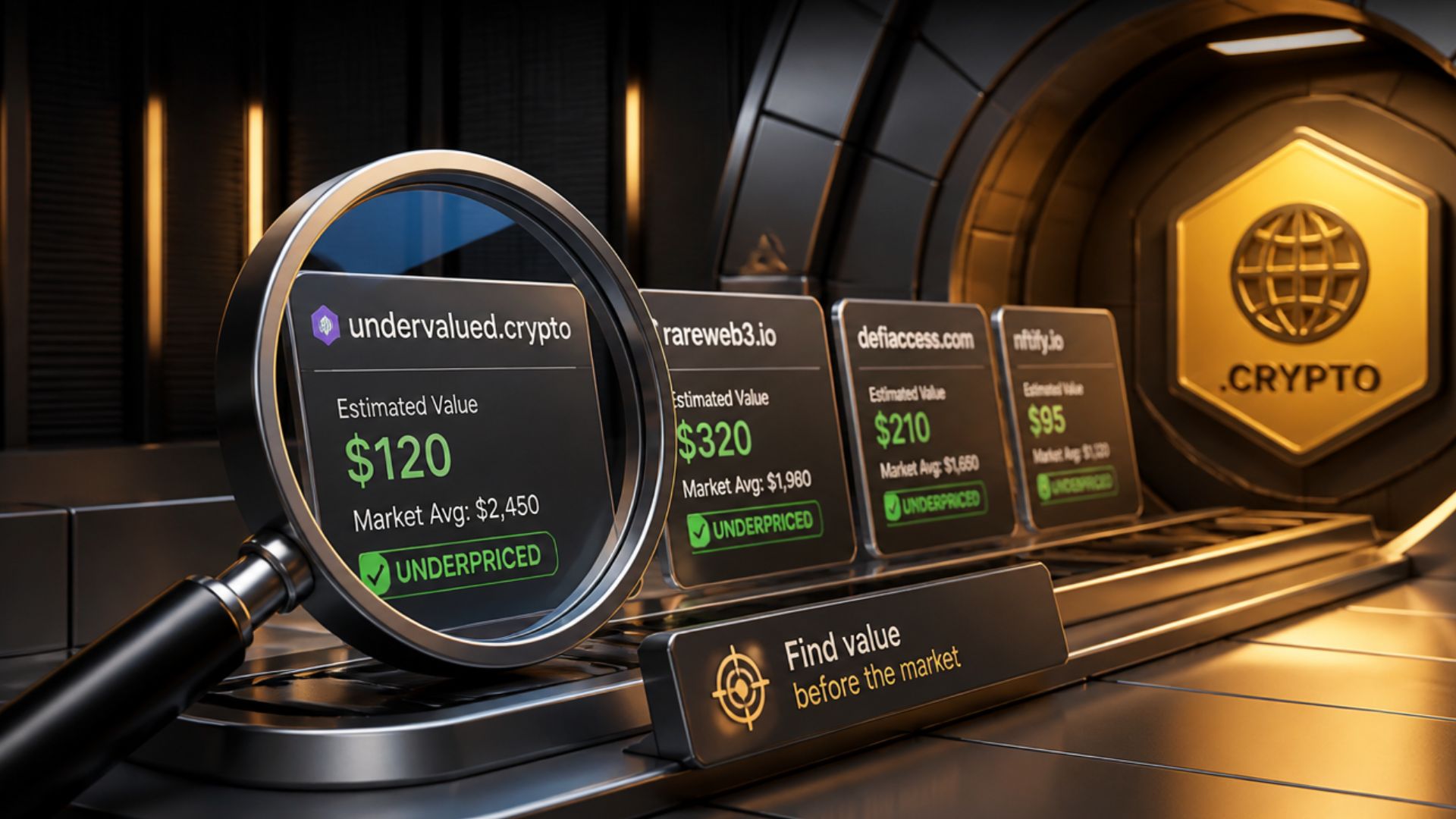
Comparable sales provide stronger evidence. If similar names have recently sold for certain amounts, those transactions can help establish a realistic range. Other factors, such as scarcity, brandability, commercial relevance, and ecosystem support, can then help explain why one name may command more than another.
A premium label can therefore be a useful starting point, but it should not end the valuation process. The real question is whether the name has characteristics and market demand that support the price being asked.
How to Evaluate a Premium Crypto Domain
A premium label is useful, but treat it as a starting point rather than proof of value. Before paying a premium price, consider why the name received that designation and whether its underlying characteristics support the asking price.
- Check who assigned the premium label. Determine whether it comes from the naming protocol, domain provider, marketplace, or seller. The label’s source tells you what it actually represents.
- Understand the reason for the classification. A higher price may reflect shortness, scarcity, a common word, or a provider’s pricing strategy. In some systems, “premium” can instead refer to a temporary fee or availability mechanism.
- Assess the name itself. Consider its length, meaning, spelling, memorability, and branding potential. A premium designation carries less weight when the name has little practical or commercial appeal.
- Consider utility and ecosystem support. A name becomes more useful when wallets, applications, and other services support the underlying naming system. Broader adoption can also increase the pool of potential users and buyers.
- Compare it with actual market evidence. Look for comparable sales rather than relying only on current listings or automated valuations. An owner’s asking price shows what the seller wants, while a completed transaction shows what a buyer was actually willing to pay.
- Separate long-term value from current trends. A name tied to a temporary crypto trend may attract attention today without having lasting demand. Stronger candidates have relevance that can remain useful beyond a short market cycle.
The goal is not to determine whether a name carries the word “premium.” The goal is to understand what supports that classification and whether independent evidence suggests the price makes sense.
Conclusion
A premium crypto domain is not defined by price alone. Shortness, scarcity, commercial relevance, brandability, and utility can all increase a name’s appeal, but the meaning of “premium” depends on who assigns the label and how that system defines it.
Before paying a premium price, look beyond the designation. Check why the name received it, assess its practical and commercial potential, and compare the asking price with evidence from the wider market. The label can signal scarcity or demand, but it does not guarantee value.