
An expired crypto domain does not disappear the moment its registration period ends. It can pass through several stages before it is finally deleted, and the time available to recover it depends on the registrar, registry, and domain type. Missing a renewal can therefore lead to website or email disruptions long before the name is permanently released. Knowing what happens at each stage makes it easier to recognize when recovery is still possible and when it is too late. This guide breaks down the timeline from expiration to deletion and explains where traditional and Web3 domains differ.
What Happens When a Crypto Domain Expires?
When a traditional domain used by a crypto project reaches its expiration date, it does not immediately become available to someone else. The registration enters a series of stages, and the owner’s options become more limited as it moves toward deletion. Exact timing varies by registrar and top-level domain, so the expiration date alone doesn’t tell you how much recovery time remains.
The Expiration Date: Renewal Is Missed
The expiration date marks the end of the paid registration term. If the owner does not renew it, the registrar can begin its post-expiration process. What happens next depends on the registrar’s policies and the TLD’s rules.
At this point, the original registrant may still be able to renew the name through the registrar. The website or email service may also continue working temporarily, although service interruptions can occur during the expiration process.
The key point is that expiration starts the recovery process, not the point at which ownership is immediately lost.
The Post-Expiration Grace Period
After expiration, many traditional gTLD registrations enter a registrar-controlled renewal period. Under ICANN’s Expired Domain Deletion Policy, a registrar may retain an expired registration for up to 45 days before deleting it, although it can delete the registration sooner depending on its policies and circumstances.
During this period, the original registrant can generally still renew the registration. However, the registrar may suspend the website, redirect the name, or otherwise interrupt DNS services. That is why you shouldn’t treat an expired registration as harmless just because renewal is still possible.
The safest approach is straightforward: renew as soon as possible rather than relying on the remaining grace period.
Redemption: The Last Chance to Recover the Domain
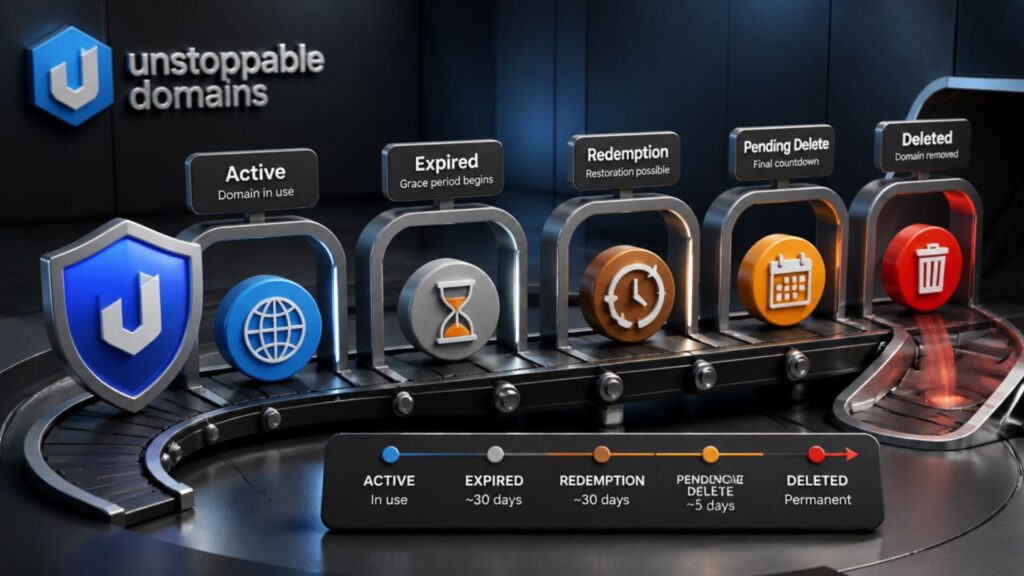
If the registrar deletes the registration, the situation becomes more serious. For applicable gTLDs, the registry places the name into a 30-day Redemption Grace Period (RGP). The previous registrant can still request restoration through the registrar, but this is no longer an ordinary renewal.
During redemption, the name does not function normally in DNS. Restoration can also cost more because the registrar must recover the deleted registration rather than simply extend an active one.
This is the stage where waiting becomes costly. The name is still recoverable, but the easy renewal window has already passed.
Pending Delete: The Point of No Return
After the Redemption Grace Period ends, the registration can enter pendingDelete. In the standard gTLD model, this stage lasts five days before the registry purges the name.
At this point, the previous registrant can no longer restore the registration through the normal redemption process. There is no further renewal window to rely on.
For anyone watching an expired name, pendingDelete is therefore the critical status to recognize: the registration is approaching permanent deletion, and recovery is no longer available.
Final Deletion: When the Domain Is Purged
Once the Pending Delete period ends, the registry removes the registration. The former owner no longer has recovery rights, and the name may become available for a new registration under the TLD’s rules.
This is also where the distinction between expiration and deletion becomes clear. The name can remain recoverable for weeks after its expiration date, but once it has completed the deletion process, the previous registration is gone.
The Crypto Domain Expiration Timeline at a Glance
The timeline below shows the typical sequence for a traditional gTLD used by a crypto business or project. The exact number of days can vary by registrar and TLD, so these stages should be treated as a general framework rather than a fixed countdown.
| Stage | What happens | Can the original owner recover it? |
| Expiration | The paid registration term ends, but the name may still be held by the registrar. | Usually yes |
| Post-expiration renewal | The registrar may allow the previous registrant to renew, subject to its policies and fees. | Yes |
| Redemption Grace Period | After deletion, the name can generally be restored through the registrar during the applicable 30-day recovery period. | Yes, with restoration |
| Pending Delete | The name enters the final registry stage before deletion. Under the standard gTLD model, this lasts five days. | No |
| Final deletion | The registry purges the registration. The previous owner can no longer restore it. | No |
The key takeaway is that expiration does not equal immediate deletion. The registration can remain recoverable through multiple stages, but each step reduces the owner’s options. Once the name reaches Pending Delete, the previous registrant has passed the practical point of recovery.
What Happens to the Website, DNS, and Email?
The first noticeable consequence of an expired registration may be a service problem, not a deletion notice. A website can stop resolving, email can fail, and other services that rely on the same DNS records can become unavailable while the registration is still recoverable.
For traditional gTLDs, the registrar’s handling of the expired name determines when these changes occur. ICANN’s recovery policy allows registrars to interrupt DNS resolution during the post-expiration period, and once a successful renewal is completed, the registrar must restore the DNS resolution path.
This means a website going offline does not necessarily mean the registration has been deleted. The name may still be within the registrar’s renewal window. The reverse is also important: a website continuing to load does not mean the registration is safe. Service availability and registration status are related, but they are not the same thing.
Email can be affected in the same way. If the registration’s DNS records are no longer being served, mail servers may not be able to locate the required MX records. For a crypto project using the same name for its website, support inboxes, and other services, an overlooked renewal can therefore cause several systems to fail before the registration reaches final deletion.
Do Expired Crypto Domains Go to Auction?
Not necessarily. A registrar can send an expired registration to auction, but an auction is not a required step in the registry’s deletion process. What happens depends on the registrar’s policies, the TLD, and whether the name is considered suitable for resale.
Some registrars may list an expired name for auction before it reaches final deletion. If someone acquires it through that process, the name may never become available through a normal public registration. Other expired names may remain with the registrar, enter redemption, and eventually proceed to Pending Delete if nobody recovers them.
This creates an important distinction for anyone tracking an expired crypto-related domain:
Expiration does not automatically mean “available soon.”
A name can be:
- still recoverable by its previous registrant
- listed in a registrar’s expired-domain auction
- progressing through the registry’s redemption process
- approaching Pending Delete
- or already deleted and available for a new registration
The auction process and the registry lifecycle therefore need to be viewed separately. The registry determines when it deletes a registration, while the registrar may decide how to handle the name commercially before that happens. Once a name reaches pendingDelete, it can no longer be restored through the normal redemption process and is heading toward registry purge.
For someone hoping to acquire an expired name, this distinction matters. Waiting for the final drop is not always enough because a registrar may have already routed the name to an auction or another resale process.
Do Web3 Domains Follow the Same Expiration Timeline?
No. A blockchain-native name does not necessarily follow the expiration and deletion process used by traditional DNS registrations. The rules depend on the naming system and its provider, so applying a standard .com-style timeline to every crypto domain can lead to the wrong conclusion.
ENS .eth Domains
ENS uses its own registration lifecycle. An expired .eth name enters a 28-day grace period, during which the previous registrant can renew it, and another user cannot register it. If it is not renewed during that period, the name enters a 21-day temporary premium period. The registration price starts high and decreases over time, allowing a new user to register the name once the applicable conditions are met.
This is fundamentally different from the traditional gTLD process. There is no 30-day Redemption Grace Period followed by a five-day pendingDelete stage. Instead, the name moves through ENS-specific states governed by its smart-contract registration system.
Unstoppable .crypto Domains
Unstoppable’s .crypto names use a different model again. Its original Web3 domains are purchased once and recorded on-chain rather than maintained through the recurring renewal system used by conventional DNS registrations. Unstoppable describes these names as having permanent ownership, so an owner does not normally face an annual expiration date that starts a traditional deletion countdown.
That means a .crypto name associated with Unstoppable should not be treated as though it will automatically move from expiration to redemption and Pending Delete.
Why the Domain Type Matters
The phrase “crypto domain” describes a use case, not one universal registration system. A .com used by a cryptocurrency company can follow the conventional registrar and registry lifecycle, while an ENS .eth name or an Unstoppable .crypto name can operate under entirely different rules.
Before assuming that a name is approaching deletion, identify which naming system issued it and how that system handles ownership, expiration, and recovery. That is the only reliable way to determine what happens after an apparent expiration.
We can close with a concise takeaway that reinforces the central distinction without introducing new information.
Conclusion
An expired crypto-related domain does not necessarily disappear right away. For traditional gTLDs, it can move through renewal, redemption, Pending Delete, and final deletion, with recovery options becoming more limited at each stage. Auctions can also change how an expired name is handled before deletion.
The key is to identify the naming system first. A conventional domain used by a crypto project may follow the standard registry lifecycle, while Web3 names such as .eth and .crypto can operate under different rules. Understanding that distinction helps owners avoid missed renewals and determine whether an expired name can still be recovered.