
A crypto domain with a strong keyword can look valuable at first glance. It may describe a popular niche, match a relevant search term, or make the business behind it easier to understand. But keyword relevance alone does not explain why some names attract far more interest than others. The strongest ones often have something harder to measure: brand potential. They are memorable, flexible, distinctive, and able to represent a business beyond a single product or search query. Understanding that difference is key to recognizing why brand often matters more than keywords when assessing long-term value.
Keywords Don’t Automatically Make a Crypto Domain Valuable
A keyword can make a crypto domain easier to understand, but that does not make it valuable by default. A name built around terms such as crypto, wallet, or DeFi may immediately signal its niche, yet that advantage has limits.
Google has also made clear that keywords in a domain name have little direct influence on search rankings. Its exact-match domain system is designed to prevent sites from gaining excessive ranking credit simply because their names closely match a search query.
That does not mean keywords have no value. A strong industry term can still make a name relevant and commercially appealing. The key distinction is that search relevance and brand value are different. A keyword may tell people what a business is about, while a strong brand gives them a name they can remember and associate with that business.
What Makes a Crypto Domain Valuable as a Brand?
A brandable name does more than describe a product or industry. It gives people something they can recognize and remember. That matters in crypto, where businesses often operate in crowded markets and compete for attention across websites, apps, social platforms, and online communities.
Several qualities make a name easier to build into a brand:
Memorability
A strong name should stick after someone sees or hears it. Short, familiar, or distinctive words are often easier to recall than long combinations of keywords, numbers, or abbreviations.
Simplicity
People should be able to pronounce, spell, and type the name without much thought. If customers regularly need to ask how a name is spelled, its branding potential becomes weaker.
Distinctiveness
A brand needs room to stand apart. A highly generic keyword may explain a category clearly but can be difficult to distinguish from similar businesses using the same terminology.
Flexibility
A useful brand should not become outdated when the business expands. A name tied too closely to one product, technology, or crypto trend can become restrictive if the company later moves into another area.
Longevity
The best names can remain useful even as the market changes. That makes brandability particularly important in crypto, where technologies, narratives, and product categories can shift quickly.
These qualities give a name value beyond what it matches in search. The more easily people can remember, recognize, and build meaning around it, the more potential it has as a lasting brand.
Why Brandability Can Outweigh Keyword Relevance
A keyword usually points to a category. A brandable name can represent an entire business.
Consider the difference between a name built around a specific crypto service and one that could support a wallet today, a payments product tomorrow, and a broader financial platform later. The first may communicate its purpose faster, but the second gives the business more room to grow without changing its identity.
That flexibility can also expand the pool of potential buyers. A narrow keyword may appeal mainly to businesses operating in one category. A memorable, distinctive name can attract companies with different products but a similar need for a strong identity.
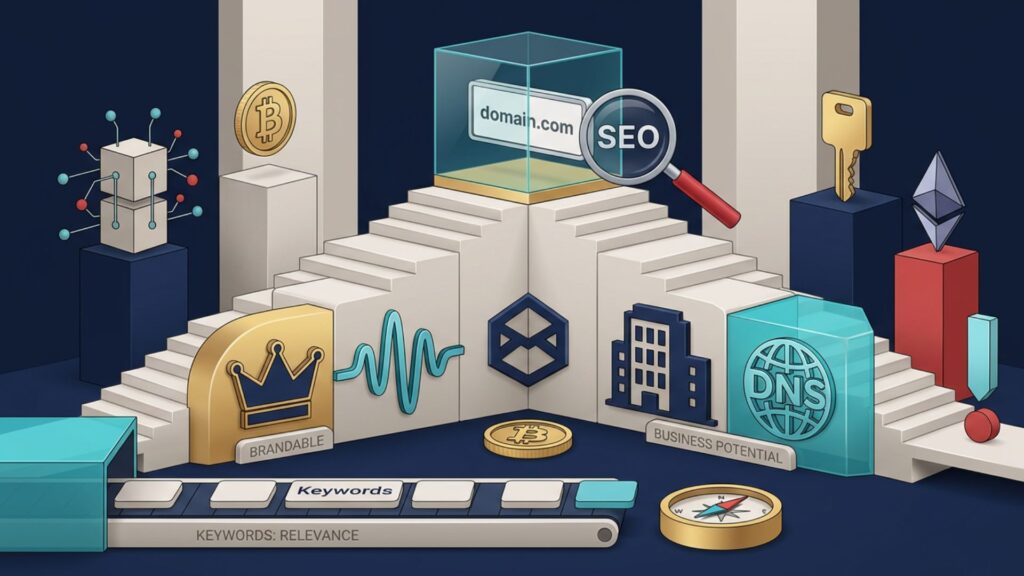
Brandability also matters after the initial sale. A name that is easy to remember can carry across advertising, social media, partnerships, communities, and direct traffic. People shouldn’t have to find it through a search result every time they want to reach the business.
This is why keyword strength should not be confused with overall value. A keyword can provide immediate relevance, but brandability can create broader commercial potential. The strongest names give buyers something to build on, not just something that matches what people search for.
When Keywords Still Add Value
Brandability may carry more weight, but that does not make keywords irrelevant. A strong industry term can still give a crypto domain an advantage when it has clear meaning, commercial relevance, and genuine demand.
A name built around an established concept such as wallet, exchange, DeFi, or RWA can immediately tell potential buyers what market it relates to. That clarity can make it easier to understand and potentially more attractive to businesses operating in that space.
The keyword itself also matters. A widely recognized term with lasting relevance is generally more useful than a narrow phrase tied to a short-lived trend. Scarcity can increase that appeal when few strong names are available around an important category.
However, relevance is only one part of the equation. A keyword-rich name that is difficult to remember, overly narrow, or awkward to use may have less practical appeal than a simpler, more distinctive alternative.
The strongest names therefore do not rely on keywords alone. They use relevance to communicate value while retaining the qualities that make a name worth building a brand around.
Yes. Bullet points work better here because we’re giving the reader a practical checklist. I’ll keep the explanations concise so it doesn’t turn into another long section.
How to Recognize a Brand-First Crypto Domain
The easiest way to judge brand potential is to stop asking how well a name matches a search query and consider how well it could represent a business. Look for these qualities:
- Easy to remember: A name that sticks after one exposure is easier to use in conversations, recommendations, and marketing. Excessive length, numbers, or complicated combinations can work against this.
- Easy to say and spell: Someone should be able to hear the name and type it correctly without much effort. This matters when the name is shared verbally or through communities rather than discovered through search.
- Flexible enough to grow: A strong brand should not lock a company into one product, technology, or trend. A name that remains relevant as the business expands has greater long-term potential.
- Distinctive: A name should stand apart from competing projects and businesses. Being highly relevant is useful, but a name that sounds like several others can create confusion.
- Useful beyond search: In Web3, a name may also function as an identity across wallets, applications, communities, or other parts of the ecosystem. Its usefulness can therefore extend beyond appearing in search results.
These qualities help reveal whether a name can become more than a keyword. The strongest candidates are easy to remember, flexible enough to grow, and distinctive enough to build an identity around.
Brandable vs. Keyword-Rich Crypto Domains
Choosing between a keyword-rich and brandable name depends on what the business needs. A keyword-led option can provide immediate category clarity, while a brand-first option can offer more flexibility as the business develops.
| Keyword-rich | Brandable |
| Immediately communicates a specific topic | Creates a distinct business identity |
| Can benefit from strong industry relevance | Can support broader positioning |
| Often tied to a particular category or use case | Can adapt to different products or services |
| May appeal strongly to buyers in that niche | Can attract businesses looking for a lasting brand |
| Its value can depend heavily on the underlying term | Its value can come from memorability and commercial flexibility |
Neither approach is automatically better. A highly relevant keyword can be valuable when the term has strong demand and lasting commercial meaning. A brandable name can be more useful when the goal is to build an identity that can evolve with the business.
The strongest opportunities can combine both: a name with enough relevance to make sense and enough brandability to become memorable.
Conclusion
Keywords can give a crypto domain immediate relevance, but they are only one part of its potential value. A strong name can do more than match a category. It can become an identity that people remember, businesses can build around, and products can grow with.
That is why brandability deserves more weight when evaluating long-term potential. The strongest names combine memorability, flexibility, distinctiveness, and genuine market relevance rather than relying on search terms alone.