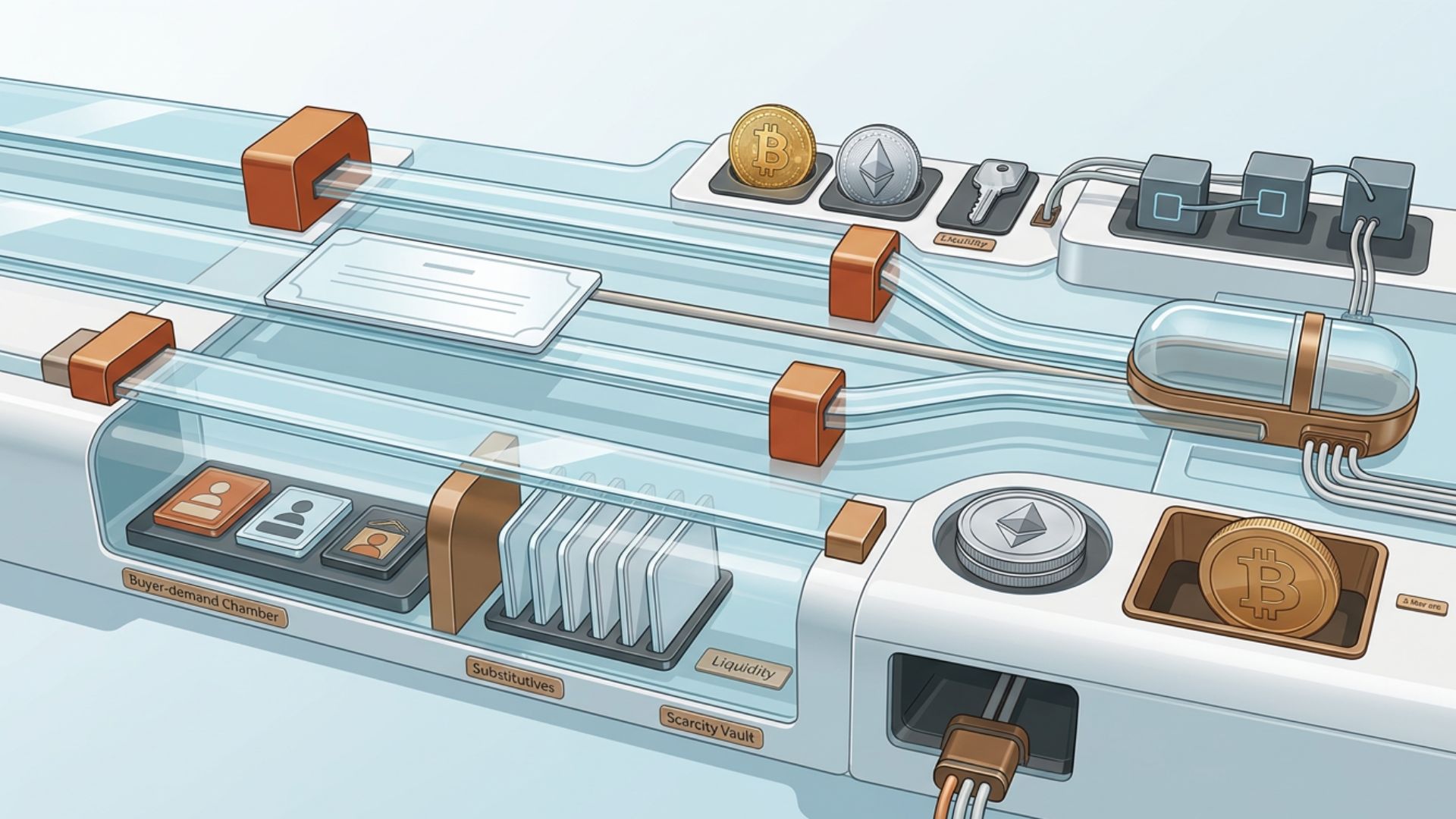

By the time a crypto trend becomes widely recognized, the most desirable names associated with it may already be registered or trading at a premium. That makes timing important for anyone looking to invest in Web3 naming assets. The challenge is knowing which opportunities deserve attention before broader demand catches up. Instead of chasing whatever is currently popular, investors can look for early signs of genuine demand, assess the naming opportunity, and compare it with available market evidence. This approach helps separate potentially undervalued opportunities from cheap names that have little reason to appreciate.
What Makes a Crypto Domain Underpriced?
Not every inexpensive name is a bargain. A low asking price may simply reflect weak demand, poor branding, limited utility, or an extension with little buyer interest. An underpriced opportunity is different: its current cost appears low compared with the strength of the factors that could attract future buyers.
Several signals can help determine whether a name is genuinely undervalued:
- Demand: Is the underlying term gaining real commercial or ecosystem activity?
- Scarcity: Are there few strong, available names built around the same concept?
- Brandability: Is it short, memorable, easy to spell, and suitable for a business?
- Buyer potential: Can you identify companies, projects, or founders who could realistically want it?
- Market evidence: Do comparable sales support the possibility of higher valuations?
- Ecosystem relevance: Does the extension have meaningful utility and adoption?
- Risk: Are trademark, technical, liquidity, or platform concerns likely to reduce its appeal?
The goal is not to predict which name will become popular. It is to identify a mismatch between current market pricing and the evidence supporting potential demand. That distinction provides a more reliable starting point for evaluating opportunities.
Start With Emerging Demand, Not Available Domains
Starting with available names is usually the wrong approach. Availability only means nobody has registered the name; it does not indicate future demand. Instead, watch where crypto and Web3 activity is developing. Look for emerging technologies, new protocols, startups, products, and terminology that are gaining attention across multiple independent sources. Commercial activity is particularly useful because businesses create a more tangible pool of potential buyers than short-lived social media hype.
New naming ecosystems can also create early opportunities, particularly when useful names are still available before awareness grows. However, never treat a new extension as valuable simply because it is new. Check its registration model, intended use, ecosystem support, adoption, and potential buyers alongside the name itself. The goal is to spot genuine demand while the market is still catching up, not to register every term tied to the latest crypto trend.
Turn an Emerging Trend Into a Domain Opportunity
Once you identify a promising trend, the next step is turning it into specific naming opportunities. Start by extracting the core terms people use to describe the technology, service, or market. Look beyond exact-match phrases and consider short, brandable combinations that could work for companies or products. Commercial relevance matters more than hype, so prioritize terms that describe a service, industry, technology, or business function rather than names tied only to a speculative token or temporary meme.
Scarcity also matters, but evaluate it alongside the extension. Check how many strong alternatives exist, whether comparable names are already registered, and whether the relevant naming ecosystem has meaningful adoption and utility. A strong keyword in an established system may offer a better opportunity than an equally attractive term attached to an extension that is used only a limited number of times. The goal is to find a combination of relevant terminology, limited supply, practical branding potential, and credible ecosystem demand.
Check Whether the Market Has Already Priced the Opportunity
Before assuming a name is underpriced, find out what comparable names have actually sold for. Focus on completed transactions rather than seller expectations, and compare names with similar length, wording, extension, commercial purpose, and overall quality. Marketplace listings can still help you understand current competition, but a $20,000 asking price does not prove buyers consider the name worth $20,000. Recent sales provide stronger evidence because they show what someone was actually willing to pay.
Look for gaps between comparable sales, current listings, and the candidate you are evaluating. A useful opportunity may exist when a strong name has characteristics similar to recently sold names but remains available at a substantially lower cost. Still, avoid treating one transaction as a definitive valuation. Crypto naming markets can be thin and highly variable, so several relevant comparisons are more useful than a single headline sale. The objective is to establish a reasonable range before deciding how much you are willing to spend.
Identify Who Could Actually Buy the Name
A promising naming opportunity needs more than a strong keyword. It needs potential buyers. Start by identifying businesses, startups, protocols, developers, or other organizations that operate in the relevant category. Search for companies already using related terminology and consider whether the name could improve their branding, product positioning, or market presence. The broader and more credible the buyer pool, the stronger the case for holding the name.
Think beyond the most obvious company. A useful name might appeal to several businesses entering the same market, while a highly specific term may depend on one narrow use case. This distinction matters when estimating resale potential because a name with multiple plausible end users has more paths to a successful sale. If you cannot identify who would reasonably want the name or why they would pay for it, a low acquisition cost may not make it a good investment.
Evaluate the Name Before Spending Money
Before acquiring a promising name, examine the factors that could affect its usefulness and resale potential. Check whether it is easy to remember, pronounce, and spell, and whether its meaning remains commercially relevant beyond the current trend. Review search interest and broader market activity where appropriate, but do not treat search volume alone as proof of buyer demand. You should also investigate trademark conflicts, existing brands, and other legal concerns before committing funds.

The naming system itself deserves equal attention. Confirm how ownership, registration, renewal, transfers, and resolution work for the extension you are considering, and understand whether the ecosystem has enough adoption to support future buyers. Also account for liquidity, holding costs, wallet security, and marketplace risks. A name can look attractive on paper yet become difficult to resell if the underlying ecosystem has limited adoption or the acquisition carries unnecessary legal or technical complications.
Use a Repeatable Process to Find Underpriced Crypto Domains
Finding potentially underpriced opportunities becomes more effective when you follow the same process each time. Start with an emerging-market signal, turn it into relevant keywords, and generate a short list of candidate names. Then validate the underlying demand, research comparable completed sales, review competing listings, and determine whether the current asking amount is reasonable. From there, screen for trademark conflicts, ecosystem limitations, security concerns, and other risks before deciding whether the opportunity deserves further consideration.
The final step is setting a maximum acquisition price before you buy. Base that limit on the name’s quality, potential buyer pool, comparable transactions, scarcity, and risks, not on how exciting the trend appears. This prevents hype from influencing the decision after the research is complete. A simple process of signal → research → comparison → risk check → valuation → decision makes it easier to reject weak candidates and focus capital on opportunities with stronger evidence behind them.
Common Mistakes That Make “Cheap” Crypto Domains Expensive
A low acquisition cost does not automatically make a name a good investment. These mistakes can turn an apparently cheap purchase into a difficult asset to resell:
- Buying because a token is trending: Short-term attention can disappear quickly, leaving little lasting demand for related names.
- Treating asking prices as market value: A seller’s listing is an expectation, not evidence of what buyers will actually pay. Completed sales provide stronger context.
- Confusing scarcity with demand: Few available names matter little if businesses and buyers have little interest in the underlying term.
- Ignoring the naming ecosystem: Different Web3 extensions have distinct registration models, utilities, adoption rates, and market conditions. Don’t treat them as interchangeable.
- Buying too many speculative names: A large portfolio of inexpensive registrations can still consume significant capital while producing few realistic resale opportunities.
- Overlooking trademark conflicts: A name connected to an existing brand can create legal complications and significantly reduce its usefulness to legitimate buyers.
- Assuming every Web3 extension has equal liquidity: Resale potential depends partly on whether the relevant ecosystem has enough users, buyers, and marketplace activity.
The common thread is simple: low cost should result from a valuation gap, not be the reason for buying. Each acquisition should have a clear demand case, identifiable potential buyers, and enough supporting evidence to justify the risk.
When an Underpriced Crypto Domain Is Not Worth Buying
Not every apparent bargain deserves a place in a portfolio. Walk away when you cannot identify realistic buyers, the underlying trend depends mainly on short-term hype, or comparable sales provide little evidence of meaningful demand. The same applies when the name is difficult to brand, has limited commercial use, or depends heavily on a narrow interpretation of a rapidly changing technology.
Legal and ecosystem risks can also outweigh potential upside. Avoid names that create obvious trademark concerns, have unclear ownership or transfer mechanics, or belong to an ecosystem with limited adoption and liquidity. Most importantly, do not buy simply because the asking amount feels low. If the evidence does not support a reasonable resale case at your maximum acquisition price, keeping your capital available for a better opportunity is often the smarter decision.
Conclusion
Finding an underpriced crypto domain is less about predicting the next big trend and more about recognizing demand before it becomes widely reflected in the market. Start with emerging technologies and commercial activity, turn those signals into relevant naming opportunities, then validate them through comparable sales, potential buyers, ecosystem adoption, and risk checks.
Most importantly, do not confuse a cheap name with a valuable one. A disciplined process helps you identify opportunities supported by real evidence while filtering out names driven mainly by hype, scarcity, or optimistic seller expectations. In a rapidly changing market, research and selectivity are more valuable than simply being early.