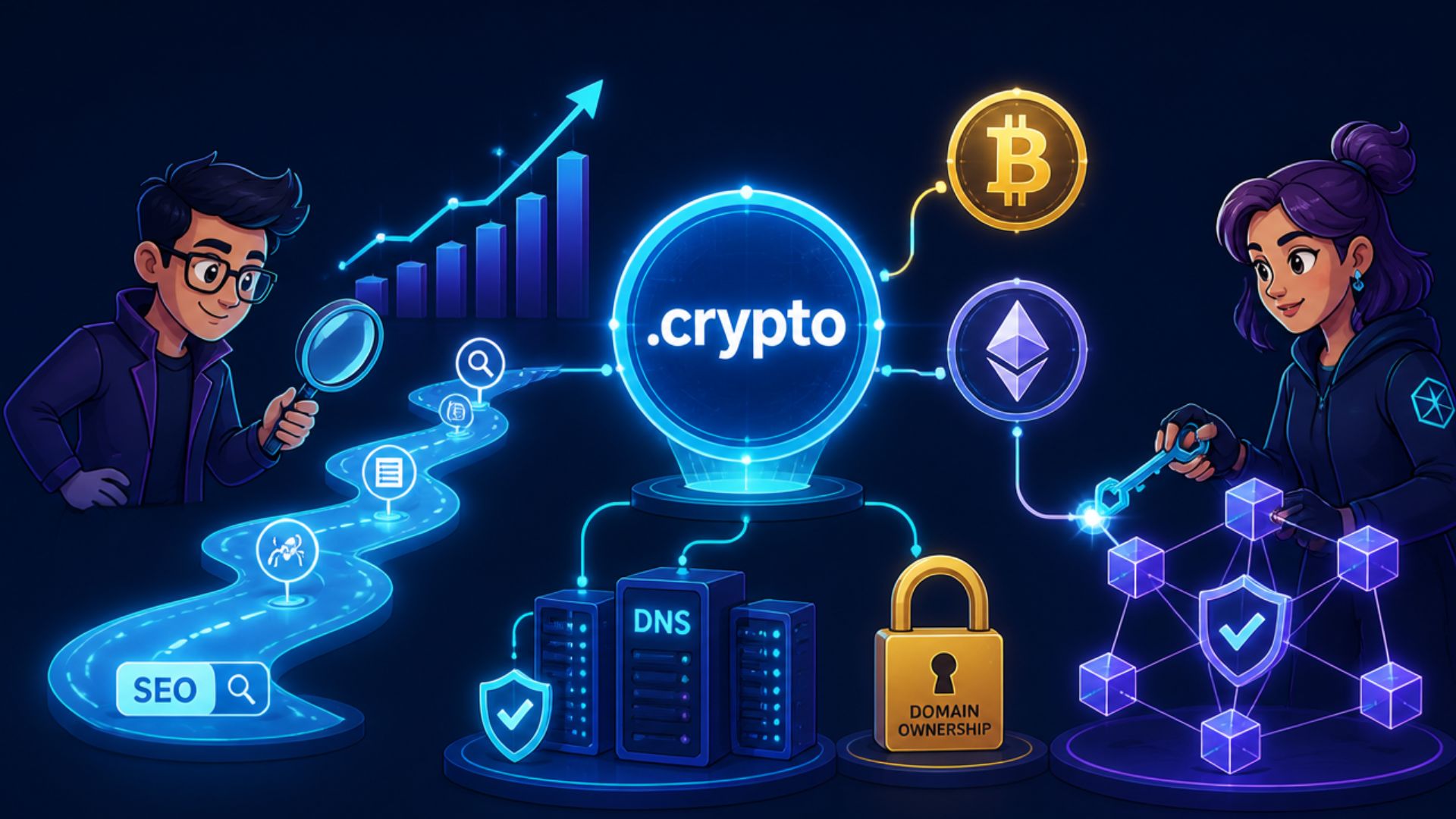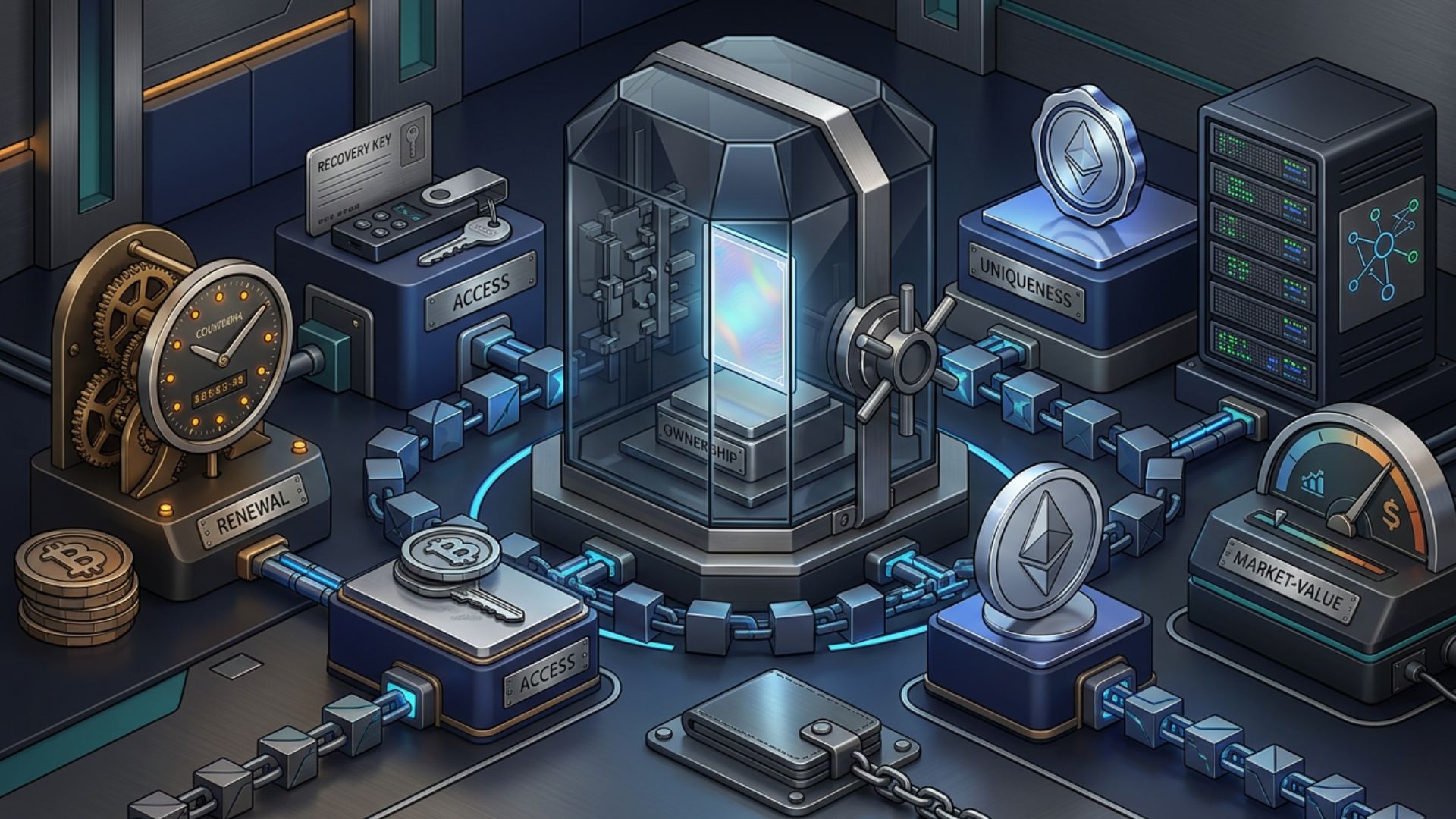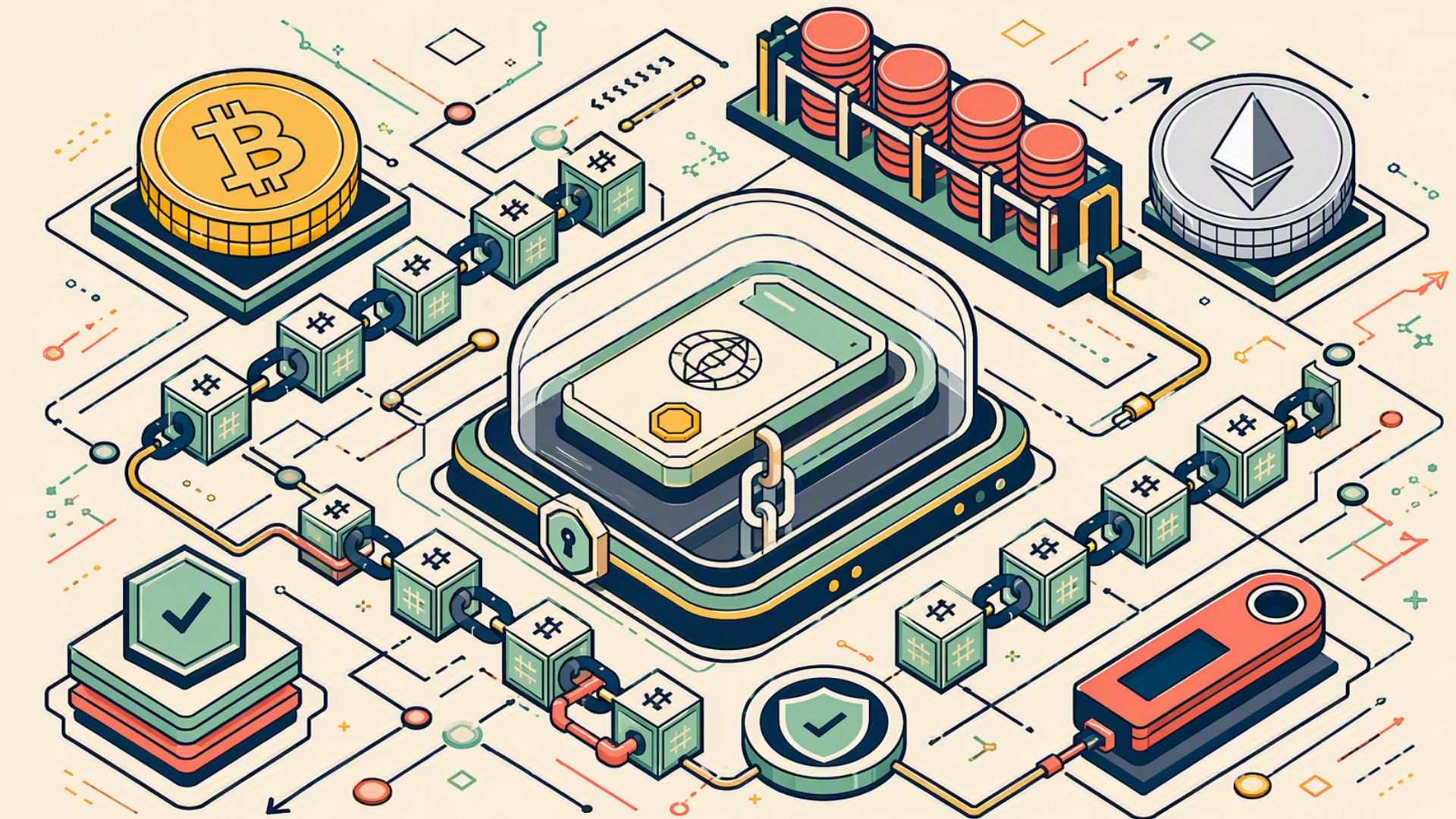
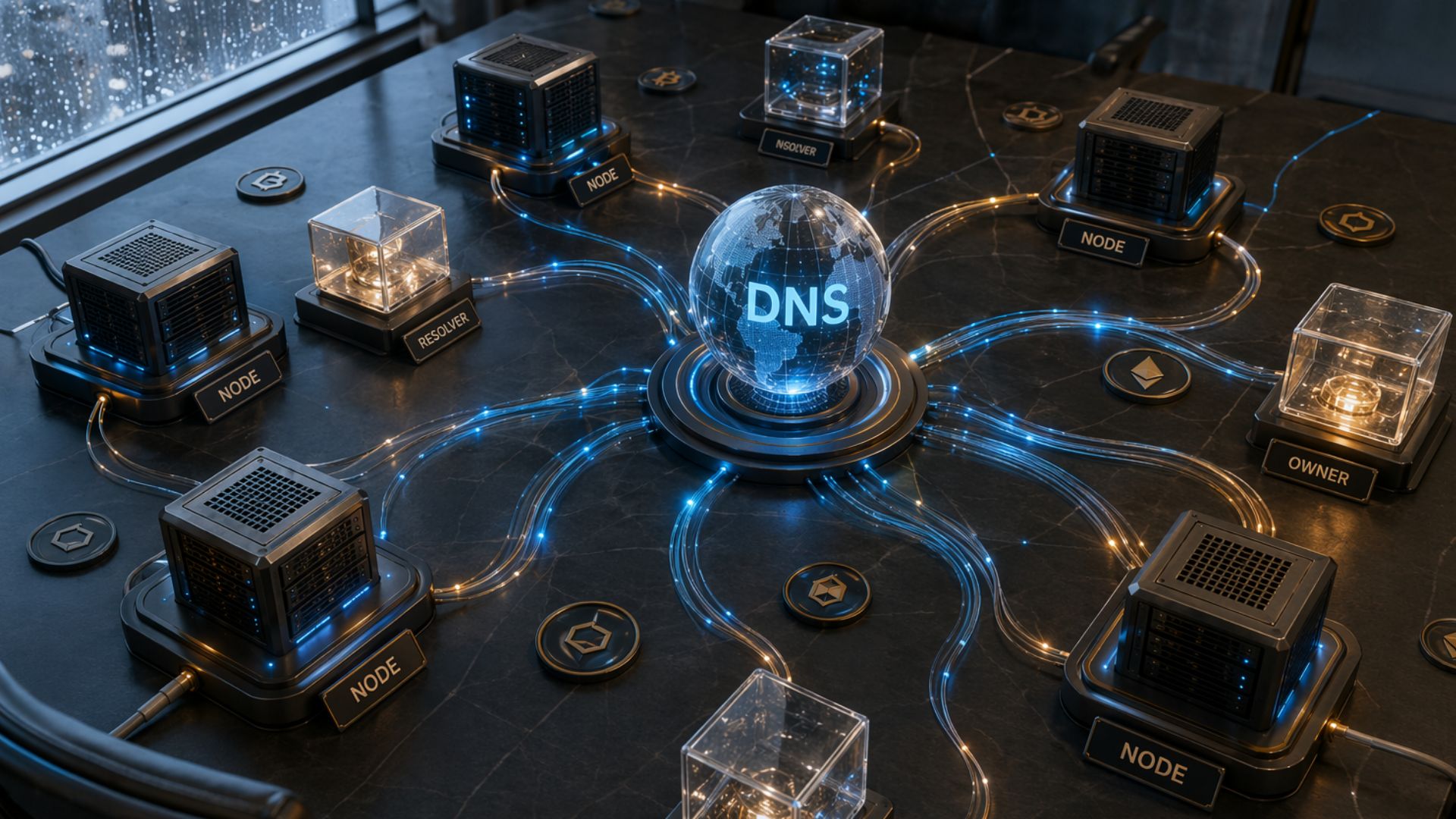
The Domain Name System (DNS) has long served as the foundation of the internet, enabling access to websites through human-readable domain names rather than IP addresses. While it has proven reliable for decades, the traditional DNS model relies on centralized organizations to manage domain registration, governance, and resolution. As blockchain technology expands beyond digital assets, decentralized DNS introduces an alternative approach that gives users greater control over their domains through a distributed infrastructure.
In this guide, we’ll explore how decentralized DNS works, how it changes domain ownership, and what this shift means for the future of internet naming.
Who Really Controls Your Domain Today?
When you register a domain name, it may seem like you own it outright. In practice, domain ownership depends on a coordinated system of organizations that manage registrations, policies, and the global DNS infrastructure. Rather than existing independently, every domain operates within this established framework.
At the center of this system is ICANN (Internet Corporation for Assigned Names and Numbers), which coordinates the global Domain Name System (DNS) and accredits domain registrars. Registries manage top-level domains such as .com and .org, while registrars provide the services that let individuals and businesses register, renew, and transfer domain names. Together, these organizations help keep the DNS stable, secure, and interoperable worldwide.
Although registering a domain gives you the exclusive right to use it for the duration of your registration, that right is governed by registrar and registry policies, renewal requirements, and the broader DNS framework. This centralized model has supported the internet for decades, but it also means domain management relies on trusted intermediaries rather than the domain owner alone.
What Is Decentralized DNS?
Decentralized DNS is a blockchain-based approach to managing and resolving domain names without relying entirely on centralized authorities. Instead of storing domain records in centralized databases, it uses distributed networks where ownership and DNS records are verified through blockchain technology and cryptographic consensus.
Like the traditional Domain Name System, decentralized DNS maps human-readable names to digital resources. The difference is that domain records are managed on a decentralized network rather than through a central authority, creating a new model for how domains are registered, managed, and controlled.
Benefits of Decentralized DNS
- Greater ownership control: Domain ownership is tied to cryptographic keys rather than relying solely on centralized registrars for access management.
- Improved censorship resistance: Domain records are distributed across blockchain networks, reducing their dependence on a single authority or point of control.
- Greater transparency: Ownership records and domain transactions are publicly recorded on the blockchain, making changes easier to verify.
- Native Web3 integration: Decentralized domains can resolve to cryptocurrency wallet addresses, decentralized websites, smart contracts, and other blockchain-based resources. This also makes them a popular choice for users looking to register a crypto domain that can function across Web3 applications.
- Programmability: Smart contracts enable automated domain management and additional functionality beyond traditional DNS capabilities.
How Decentralized DNS Changes Domain Ownership
The biggest difference between traditional DNS and decentralized DNS is where control resides. Traditional DNS relies on centralized organizations to register, manage, and maintain domain records, while decentralized DNS records ownership on a blockchain and verifies changes through a distributed network. This creates a different model for managing domains and reduces reliance on centralized intermediaries.

Key differences include:
- Ownership: Traditional domains are registered through registrars and governed by registry policies. Decentralized domains are tied to blockchain addresses and controlled through the owner’s cryptographic keys.
- Domain management: Traditional DNS relies on registrars for updates such as transfers and record changes. Decentralized DNS records these changes through blockchain transactions and smart contracts.
- Record verification: Traditional DNS depends on centralized DNS infrastructure to validate and distribute records. Decentralized DNS verifies ownership and updates through network consensus recorded on the blockchain.
- Control model: Traditional DNS operates within a centralized governance framework coordinated by organizations such as ICANN, registries, and registrars. Decentralized DNS distributes aspects of domain management across blockchain protocols and participating network nodes.
Decentralized DNS Platforms in Practice
Several projects have introduced decentralized naming systems, each using blockchain technology to reduce reliance on centralized domain management. While their approaches differ, they all demonstrate how decentralized infrastructure can support a different model of domain ownership and resolution.
Ethereum Name Service (ENS)
The Ethereum Name Service (ENS) is one of the most widely adopted decentralized naming systems. It allows users to register .eth domain names that can resolve to cryptocurrency wallet addresses, decentralized websites, and other blockchain-based identifiers. ENS also supports interoperability with the traditional DNS, allowing some existing domain names to connect with blockchain-based services.
Handshake
Handshake is a decentralized naming protocol that focuses on the internet’s root namespace. Instead of relying on centralized management of top-level domains (TLDs), Handshake uses a blockchain to record ownership of TLDs, creating a permissionless alternative to the traditional root zone.
Namecoin
Namecoin was one of the first blockchain projects to explore decentralized DNS. It introduced the .bit namespace, where domain ownership and DNS records are stored on a blockchain rather than managed through centralized registries. Its primary goal is to improve censorship resistance and give users greater control over their domains.
Challenges That Still Limit Adoption
Despite its advantages, decentralized DNS is still an emerging technology. Several technical and adoption challenges currently limit its use compared to the traditional Domain Name System.
- Limited browser support: Many decentralized domains require compatible browsers, browser extensions, or custom resolvers because they aren’t universally supported by standard web browsers.
- Low adoption: Traditional DNS remains the global standard for websites and online services, so decentralized domains are not yet widely recognized across the internet.
- Compatibility limitations: Some decentralized naming systems operate independently of the traditional DNS, which can affect interoperability across platforms.
- Private key management: Ownership is tied to cryptographic keys, making users responsible for securely storing and managing their credentials. Losing access to those keys can make recovering a domain difficult or impossible.
- Steeper learning curve: Registering and managing decentralized domains often requires familiarity with blockchain wallets, transactions, and decentralized applications, which can be challenging for new users.
Conclusion
Decentralized DNS introduces a different approach to domain ownership by using blockchain technology to reduce reliance on centralized intermediaries. While traditional DNS remains the foundation of the public internet, decentralized DNS expands what’s possible by giving users greater control over how their domains are managed and verified.
As browser support, interoperability, and adoption continue to evolve, decentralized DNS is likely to complement rather than replace the existing DNS infrastructure. Whether you’re exploring Web3 applications, managing digital identities, or simply following the evolution of internet infrastructure, understanding decentralized DNS provides valuable insight into how domain ownership may continue to evolve.